
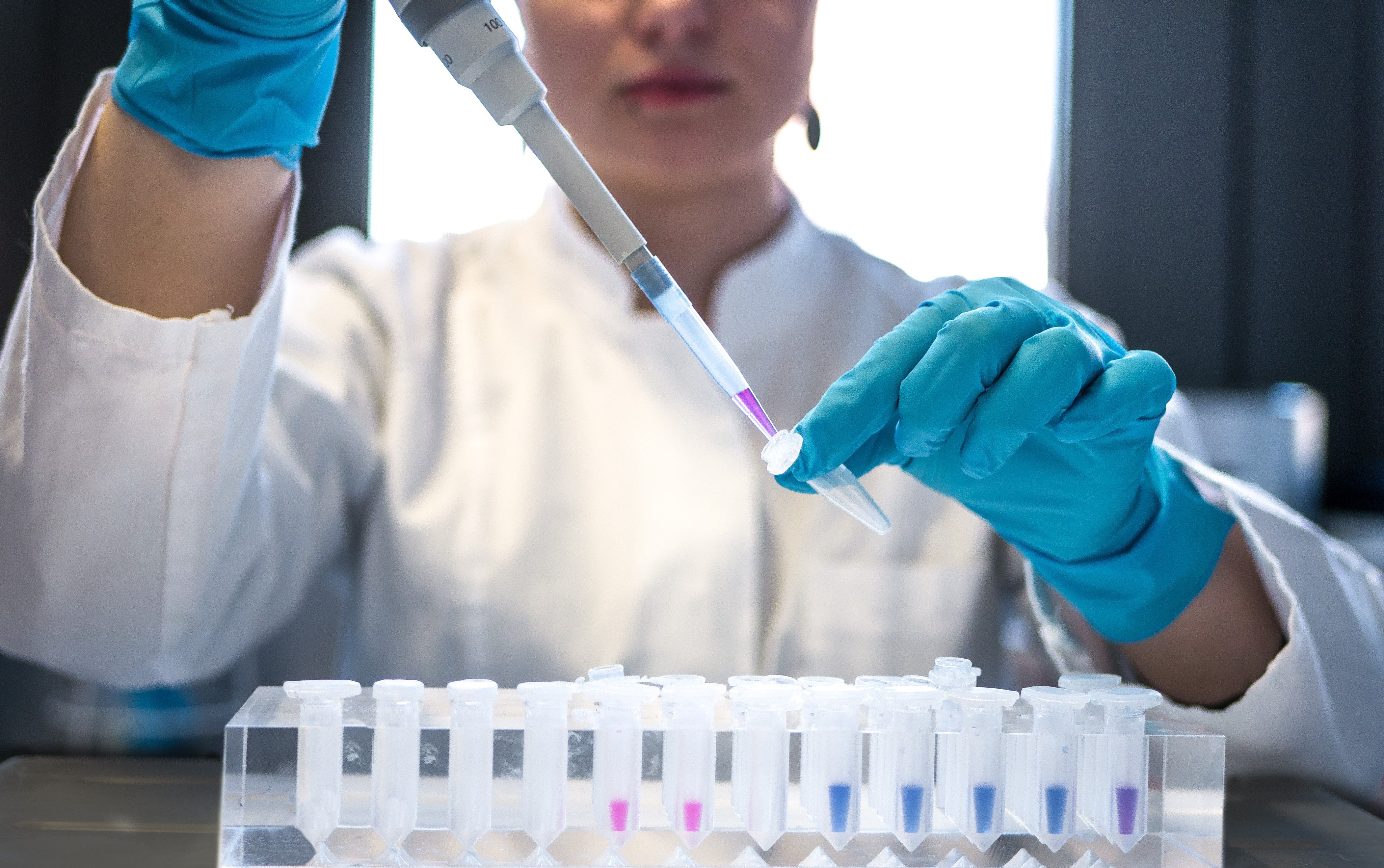

STEM: An unexplored field full of opportunities for Costa Rican girls and women
October 8th, 2022
The
exciting thing about innovation is that it always moves us forward. Those who
design and create new processes based on science are undoubtedly improving what
we know; and many of these projects will be related to improving health; that
means that innovations that will -improve lives in the near future will be
designed by young people who right now are studying high school.
Maybe it is
your daughter who invents a new process for producing a medical device that
will help people live their lives to the fullest; but only time will tell. Therefore,
while the future reaches us, it is essential to continue supporting girls and
young women to have greater access and support them to integrate into careers
related to science, technology, engineering and mathematics – STEM (for its
acronym in English), which continue to be in high demand in the labor market.
STEM
education arose from the need for young people to build an integrated and
coordinated knowledge between different disciplines to be able to solve complex
real-life problems through analytical and critical thinking.
Many
countries are investing in education and human capital that will require better
technological skills and competencies if they want to be competitive in the
future. In fact, a study presented by the Institute of Research in Economic
Sciences (IICE) of the University of Costa Rica (UCR) concluded that the
careers with greater professional demand in the future will be those belonging
to the areas of Science, Technology, Engineering and Mathematics[1].
According to the Costa Rican Coalition of
Development Initiatives (Cinde), in 2018, companies in Costa Rica created
12,961 new jobs related to STEM, and for the end of 2022, they will have
created 35 thousand new jobs[2].
However,
STEM-related professions have traditionally been perceived as a male-dominated
world; in this regard, data from the United Nations Educational, Scientific
and Cultural Organization (UNESCO) indicate that only 35% of students enrolled
in these careers are women and only 28% of researchers are women.
In Costa
Rica, the gap between men and women within STEM-related professions is similar,
since only 30% of its students enrolled in an undergraduate engineering career
are women, according to the data of the Office of Planning of the Technological
of Costa Rica. Also, it is
important to highlight that only 24% of those working in engineering or
technology fields in Costa Rica are women[3].
In this
context, the study of the Inter-American Development Bank (IDB) "Reinvest
in the Americas" points out the importance of considering gender equity
and inclusion as fundamental axes of economic efforts to promote sustainable
economic recovery in the region, for which the participation of girls, youth
and women in STEM is indispensable.
Looking
to close the gender gap in STEM
At Abbott, a health care company that creates
breakthrough products – in diagnostics, medical devices, nutrition and branded
generic pharmaceuticals – that help communities lead healthier lives, full of
unlimited possibilities, women are developing technologies applied to the
process and production of products available in the market, with the aim of
improving lives.
In Costa
Rica, Abbott has grown steadily and has professional and expert women with the
ability to create and operate new technologies that have an impact in people’s
health and life. In addition, the
company seeks to close the gender gap in STEM through a scholarship program for
young women. In this year, 23 women studying an engineering carrer at the
University of Costa Rica and the Technological Institute of Costa Rica were
awarded with scholarships.
Keyla Acosta, Human Resources Director at
Abbott noted that
"by having women equally
represented in any field, the world has the chance to experiment their
intellectual capacity to collaborate and solve the biggest problems. So if a
young woman’s dream is to create technology to help everyone have a
better quality of life, we have to support her to find a space where she develops
her intellectual and practical capacities under an equal environment, that
allows her to innovate and create new paths for human development".
Let’s not
forget that the more diverse and equitable a company is, the better the results
will be as there will be a wide range of ideas and perspectives to understand
and solve the challenges,
in fact since 2016, half of the interns in Abbott’s Costa Rica programs have
been women., globally, the inclusive practices of Abbott have earned it
the recognition as one of the top 50 companies for diversity by the publication
DiversityInc.
Today, there are still challenges to closing the gender gap in STEM, but the implementation of entrepreneurial actions brings us closer to more women developing in the areas of science, technology, engineering and mathematics. It is important to continue to combat gender stereotypes, provide support to girls in STEM education from an early age, and work with mentors and role models so that our girls and young people see that it is possible to build a successful future in these areas.
[1] Weekly university. Carrers with
greater demand in the future will be concentrated in STEM areas. https://semanariouniversidad.com/universitarias/estudio-ucr-carreras-con-mayor-demanda-en-el-futuro-se-concentraran-en-areas-stem/
[2] Universidades Costa Rica. https://blog.universidades.cr/carreras-stem-las-profesiones-del-futuro
[3] Agencia EFE. STEM, key to
economically empowering women. https://efeminista.com/stem-empoderar-economicamente-mujeres/